

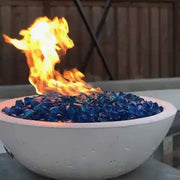

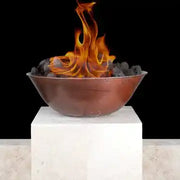

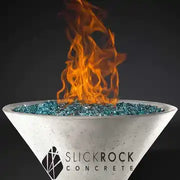



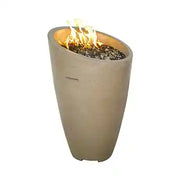
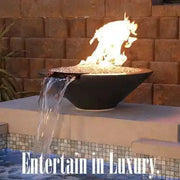


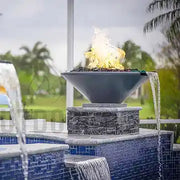

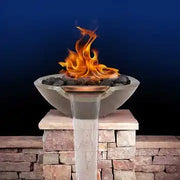







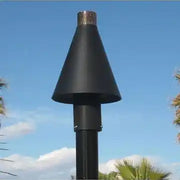
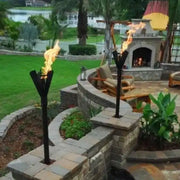
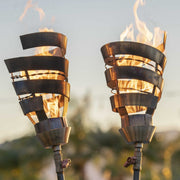
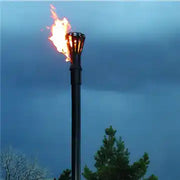
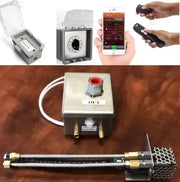



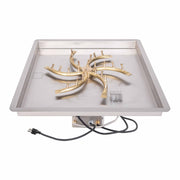
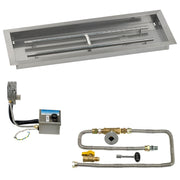
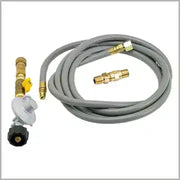
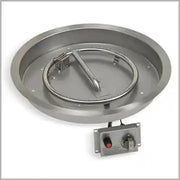
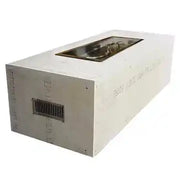







Manual gas tiki torches are simpler and usually need only gas supply and manual ignition. Therefore, they are appropriate for smaller installations or occasional use. On the other hand, automated gas tiki torches use electric ignition and require electrical components but comes with easier operation and additional control options. So, when comes to manual vs. automated gas tiki torches, the right choice depends on how many torches you need, how often you use them, and level of convenience you want.
Manual and Automated Gas Tiki Torches: What is the Difference?
A manual gas tiki torch is operated by opening its gas valve and lighting the burner by hand according to the instructions of the manufacturer. It generally does not require electric power for ignition.
An automated gas tiki torch uses electric ignition system to initiate the flame. Depending on the product, it may support a switch, timer, remote, and emergency shutoff. Therefore, you will need additional electrical planning for automated systems.
Manual vs. Automatic Gas Tiki Torches: A Quick Glance
| Feature | Manual Gas Tiki Torch | Automated Gas Tiki Torch |
| Ignition | Manual | Electronic |
| Electricity | Generally not required | Typically required |
| Operation | Hands-on | Switch or control based |
| Installation | Simpler electrical requirements | Gas and electrical planning |
| Convenience | Basic | Higher |
| Control options | Limited | May support timers or remotes |
| Best suited for | Smaller and occasional-use setups | Multiple or frequently used torches |
Understanding the mechanism of outdoor tiki torches makes it easier for you pick the right one that fulfils your needs.
How Do Manual and Gas Tiki Torches Work?
Manual Tiki Torch
A manual torch uses a gas valve for gas tiki torch ignition and controls the fuel flow. After checking the area and following the manufacturer's lighting procedure, the burner is ignited manually. When the torch is no longer needed, the gas valve should be completely closed. This makes it practical for smaller installations.
Automated Gas Tiki Torch
An automatic gas tiki torch uses electronic ignition to start the flame. Some systems also offer flame sensing, remote controls, timers, or emergency shutoff accessories as part of the gas torch ignition system.
The biggest advantage of the automated system is its convenience. A group of torches can potentially be operated from an accessible control point instead of being individually lit. This can be useful for large landscapes and frequently used entertaining areas. The electronic ignition tiki torch needs electrical infrastructure in addition to the gas supply.
Pros and Cons of Manual Gas Tiki Torches
Take a look below to understand the pros and cons of a natural gas tiki torch that operates manually:
Pros
- Simple gas tiki torch ignition
- Generally no electrical connection for ignition
- Fewer electronic components
- Suitable for smaller installations
Cons
- Requires manual lighting
- Each torch may need individual attention
- Less convenient for larger installations
- Limited automation and control options
Pros and Cons of Automated Gas Tiki Torches
Here are the pros and cons of automated natural gas tiki torch:
Pros
- Convenient electronic ignition
- Easier operation for multiple torches
- Potential compatibility with timers or remote controls
- Useful for frequently used outdoor spaces
Cons
- Requires electrical planning
- More components can increase installation complexity
- Compatibility varies between systems
Which Ignition System Should You Choose?
Choose a manual gas tiki torch if you have a small installation, use the torches occasionally, prefer a simpler setup, or do not have convenient electrical access. Manual ignition can work well when physically lighting each torch is not a problem.
Choose an automated gas tiki torch if you have several fixtures, use them frequently, value convenience, or want additional gas tiki torch control options. Automated ignition can also be useful when the torches are part of a larger outdoor lighting or entertainment system. Make sure you plan electrical requirements before installation because adding them later can be more complicated.
Conclusion
When it comes to manual vs. automated gas tiki torches, investing in the right gas torch ignition system can make outdoor tiki torches become a practical and visually striking part of a well-planned outdoor environment.
Looking for the right gas tiki torch for your outdoor space? Explore manual and automated ignition options at Outdoor Fire and Patio and find a style that fits your setup, preferences and outdoor ambience. Visit https://outdoorfireandpatio.com/ to explore the outdoor fire features and accessories.
Frequently Asked Questions
Are automated gas tiki torches better than manual ones?
Neither system is automatically right for every installation. Manual models prioritize simplicity, while automated models prioritize convenience and control. The better fit depends on the installation and intended use.
Does a natural gas tiki torch need electricity?
A manual natural gas tiki torch generally does not need electricity for ignition. An electronic ignition tiki torch typically does, although requirements depend on the model.
Are automated tiki torches difficult to install?
They may require more planning because gas and electrical infrastructure may be involved. Professional installation should follow the manufacturer's instructions and applicable local codes.
Can a manual gas tiki torch be converted to automated ignition?
Do not assume that conversion is possible. Compatibility depends on the specific torch and manufacturer-approved components. Check product documentation before modifying any system.
Which is better for multiple outdoor tiki torches?
Automated ignition can provide greater convenience when several torches are operated regularly. Manual systems may still be suitable when the installation is small and individual operation is acceptable.
What should I consider when choosing a gas torch ignition system?
Consider the number of torches, frequency of use, fuel type, electrical access, desired controls, installation requirements, maintenance, and safety clearances.
Leave a comment